Food Processor Cleaning and Maintenance Guide
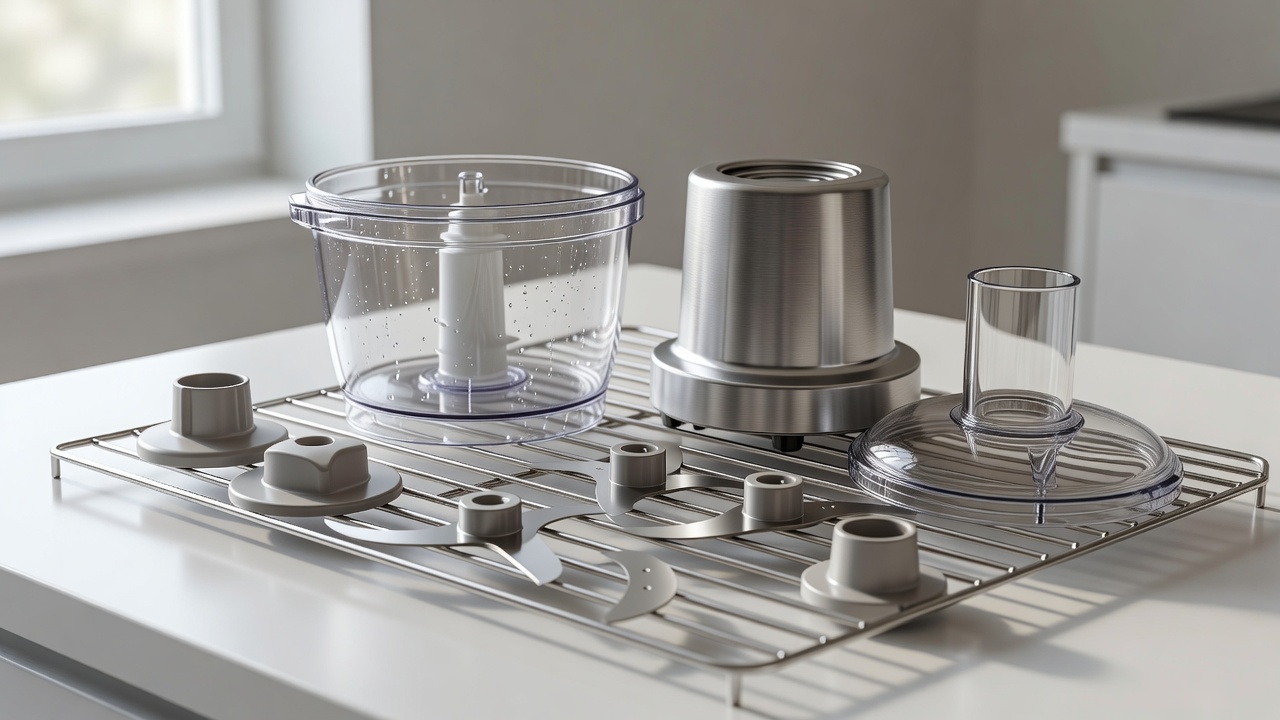
A food processor is a massive time-saver during meal preparation, but many people avoid using it simply because they dread the cleanup. With multiple interlocking parts, sharp blades, and tiny crevices where food can get trapped, a food processor requires a specific maintenance routine. Establishing good cleaning habits will not only save you time but also extend the life of the machine.
The Immediate Rinse Rule
The golden rule of food processor maintenance is never to let food dry inside the bowl or on the blades. Starches (like potato or dough) and proteins (like meat or cheese) act like glue once they dry.
Immediately after emptying the work bowl, fill it halfway with warm water and a drop of dish soap. Reassemble the machine and pulse it a few times. This quick "self-cleaning" cycle will dislodge the majority of the debris from the blades and the bowl, making the actual hand-washing or dishwashing process incredibly simple.
Dishwasher Safety: Read the Manual
While many modern food processors advertise that their bowls, lids, and blades are "top-rack dishwasher safe," you must proceed with caution.
- Heat Warping: The high heat of a dishwasher's drying cycle can warp the plastic bowl or lid. Even a slight warp can prevent the safety interlocks from engaging, rendering the machine completely unusable.
- Dulling Blades: Harsh dishwasher detergents are abrasive and can dull the sharp edges of your S-blade and slicing discs over time.
- Cloudy Plastic: Repeated trips through the dishwasher can cause the clear polycarbonate plastics to become cloudy and micro-scratched.
If you value the longevity and appearance of your machine, hand-washing the parts in warm, soapy water is highly recommended.
Tackling the Tricky Spots
Even with careful washing, certain areas of a food processor are notorious for trapping food.
The Handle: Many food processors have hollow handles that contain the metal safety interlock rod. Liquid can seep into the handle and cause mold growth. To clean this, try using a small pipe cleaner or a straw-cleaning brush with warm soapy water. Do not submerge the entire bowl if the handle is prone to retaining water.
The Blade Hub: The underside of the S-blade hub is a prime spot for dough and purees to hide. A small toothbrush is the perfect tool for scrubbing out this crevice.
Removing Odors and Stains
Processing pungent ingredients like garlic or colorful foods like turmeric and carrots can leave lasting marks.
- Odor Removal: If your bowl smells like yesterday's salsa, make a paste of baking soda and water. Scrub the bowl, let it sit for 15 minutes, and rinse thoroughly. Alternatively, pulse half a lemon (with the rind) and warm water in the machine.
- Stain Removal: Turmeric and carrot stains can be stubborn. Rubbing the stained plastic with a paper towel lightly coated in vegetable oil can help dissolve the fat-soluble pigments. Wash with hot soapy water immediately after.
Base Unit Maintenance
Never submerge the motor base in water. To clean it, simply wipe it down with a damp microfiber cloth. If food has dried on the buttons or dials, use a soft toothbrush slightly dampened with soapy water to agitate the dirt, then wipe clean. Ensure the base is completely dry before storing, and check that the cord is not pinched or tightly wrapped in a way that strains the internal wires.